

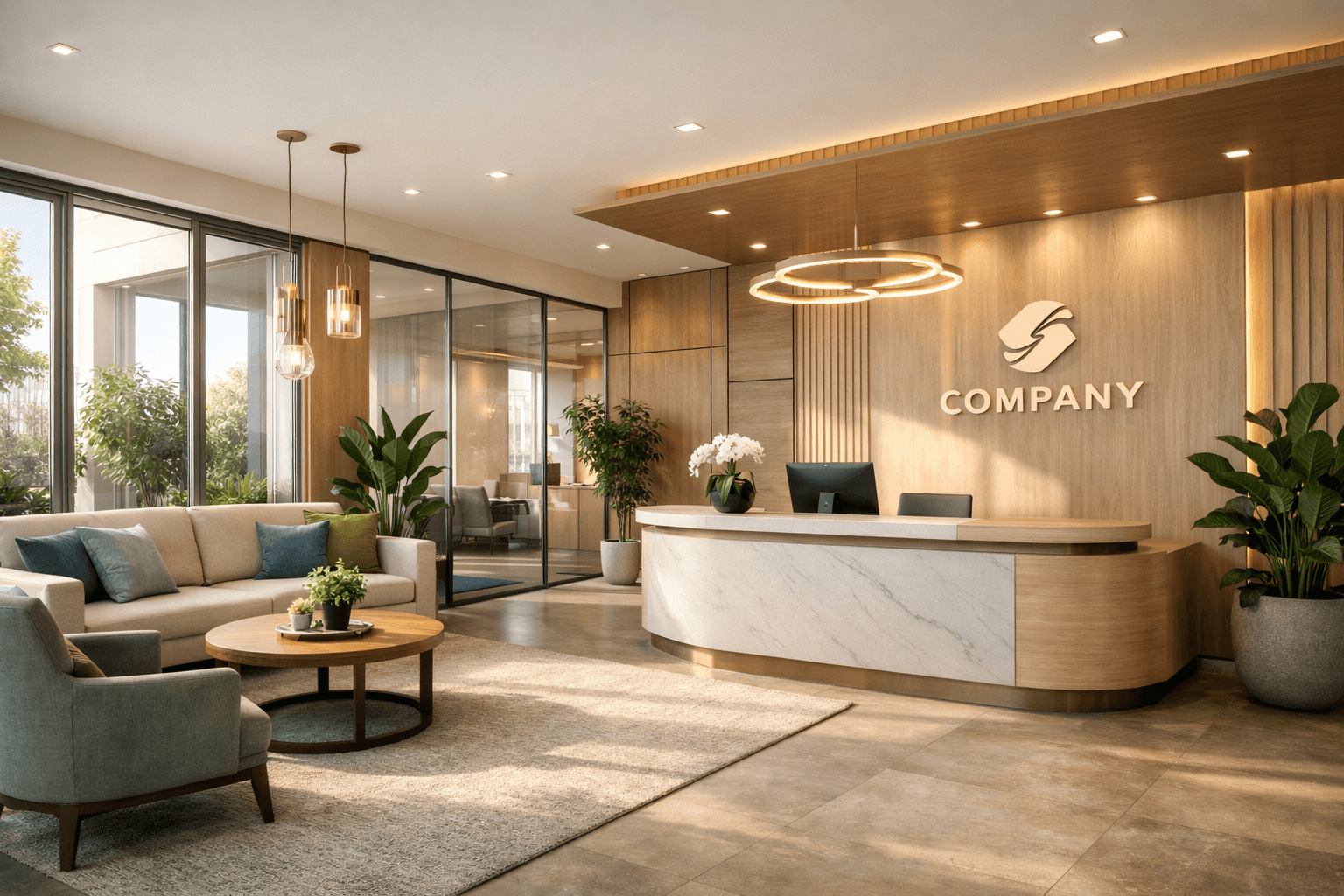
Your reception is not just a waiting area. It is the first interaction people have with your brand, which makes Office Reception Design a critical element in shaping that first impression.
Studies in workplace design show that visitors form an impression of a company within the first 7–10 seconds of entering a space. That makes your reception one of the most powerful branding tools in your office.
In 2026, businesses are moving beyond basic desks and chairs. Reception areas are now designed to communicate identity, improve experience, and support functionality.
Here are 15 well-researched office reception design ideas that modern businesses are using today.
1. Minimalist Reception Design
Minimalism is not about empty space. It is about purposeful design. A minimalist reception creates a calm and professional atmosphere. Use:
- Simple desks
- Hidden storage
- Soft lighting
👉 Perfect for: Corporate offices, consultants, finance firms
Research in workplace psychology shows that decluttered environments improve perception of professionalism and trust. This is why finance firms, law offices, and consultancies prefer minimalist receptions.
2. Branded Feature Wall
A branded wall acts like a silent spokesperson for your company.
It typically includes your logo, brand colors, and sometimes a tagline or mission statement. Materials like acrylic, metal, wood panels, or backlit signage add depth and visibility.
In modern offices, this wall often doubles as a social media backdrop, helping visitors and employees share branded content organically.
3. Biophilic Reception Design
Biophilic design connects indoor spaces with nature.
This includes indoor plants, natural lighting, wooden textures, and green walls. Research suggests that biophilic environments can reduce stress by up to 15% and improve productivity.
In reception areas, it creates a welcoming and refreshing atmosphere, especially in urban offices where natural elements are limited.
4. Smart Reception Desk
Technology is reshaping how reception areas function.
Modern desks now include digital check-ins, visitor management systems, and integrated screens. This reduces manual work and speeds up the entry process.
In high-traffic offices, smart reception systems can cut visitor wait times significantly, improving overall experience.
5. Open & Spacious Layout
Traditional receptions often feel closed and restrictive.
Modern office designs focus on open layouts that allow natural movement and visibility. Removing unnecessary partitions makes the space feel larger and more inviting.
Open layouts also align with hybrid work culture, where flexibility and flow are essential.
6. Lounge-Style Waiting Area
Comfort is becoming a priority in office design.
Instead of rigid chairs, businesses are adopting lounge-style seating with sofas, soft chairs, and coffee tables. This creates a relaxed environment similar to hospitality spaces.
A comfortable waiting area can positively influence how long visitors are willing to wait and how they perceive your brand.
7. Statement Lighting
Lighting is one of the most underestimated design elements.
Statement lighting, such as pendant lights or designer fixtures, adds character and depth to the reception. It also helps define the space visually.
Good lighting improves mood and visibility, while poor lighting can make even premium spaces feel dull.
8. Digital Display Screens
Reception walls are now becoming dynamic communication tools.
Digital screens can display company achievements, client logos, brand videos, or live updates. This keeps visitors engaged and informed.
Businesses using digital displays often see improved brand recall and engagement, especially during waiting time.
9. Glass & Transparency Design
Glass is widely used in modern office interiors.
It creates openness while maintaining structure. Glass partitions and cabins allow light to flow freely, making the reception area feel brighter and more spacious.
This design approach also reflects transparency, a value many modern brands want to communicate.
10. Multi-Functional Reception Area
Space efficiency is a key focus in 2026.
Reception areas are now designed to serve multiple purposes. They can function as waiting zones, informal meeting spaces, or even collaboration areas.
This approach is especially useful for startups and small offices where every square foot matters.
11. Artistic & Creative Walls
Creative elements add personality to your reception. Office wall designs play a key role in defining the workspace’s character and functionality.
Murals, artwork, or typography walls can reflect your brand’s culture and values. This is particularly effective for creative agencies and tech startups.
A well-designed artistic wall can make your office memorable and visually distinctive.
12. Compact Reception for Small Offices
Not every business has a large office space.
For smaller offices, the focus should be on efficiency and smart design. Wall-mounted desks, minimal furniture, and mirrors can make the space feel larger.
Compact receptions prove that good design is not about size, but about planning.
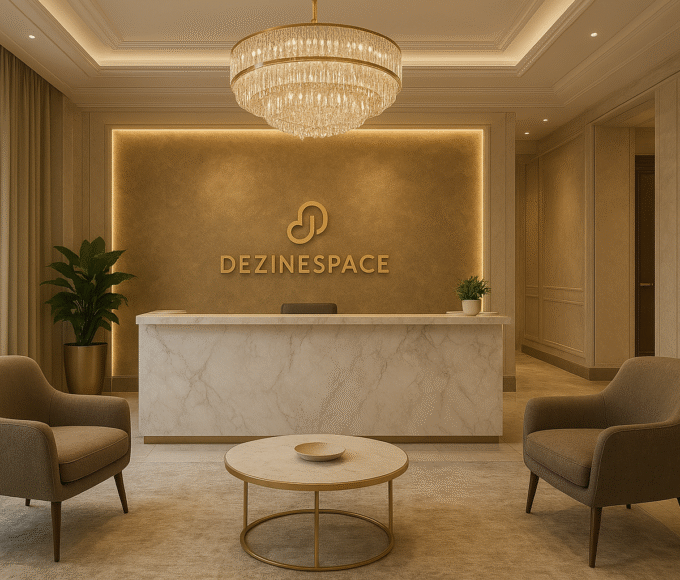
13. Luxury Reception Design
Luxury design focuses on creating a strong first impression.
Materials like marble, glass, and premium wood, combined with high-end lighting, create a sophisticated look. These receptions are common in corporate headquarters and premium brands.
A luxury reception communicates trust, stability, and success.
14. Tech-Integrated Reception
Technology integration is no longer optional.
Touch panels, automated systems, and smart lighting are becoming standard features. These elements improve efficiency and create a modern experience.
Tech-enabled receptions also align with the expectations of today’s digital-first clients and employees.
15. Cultural or Local Design Touch
Adding local elements gives your office a unique identity.
This can include traditional art, regional materials, or cultural patterns. It helps create a sense of authenticity and connection.
In global businesses, this approach also reflects diversity and local relevance.
How to Choose the Right Reception Design
Choosing the right design requires a balance of aesthetics and functionality.
Your reception should reflect your brand identity, fit your space, and align with your budget. It should also prioritize visitor comfort and ease of movement.
A well-planned reception is not just visually appealing. It is strategically designed to support business goals.
Common Mistakes to Avoid
Many businesses make avoidable design mistakes.
Overcrowding the space, ignoring lighting, or skipping branding elements can reduce the impact of your reception. Poor seating arrangements can also affect visitor comfort.
Avoiding these mistakes ensures your reception delivers the right impression.
Real Insight: Reception Trends in 2026
Modern offices are shifting towards:
- Hybrid and flexible reception spaces
- Minimal yet branded environments
- Technology-driven experiences
- Comfort-focused seating
The reception is evolving from a waiting area into a brand experience zone.
Conclusion
Your reception is your brand’s first conversation.
A well-designed reception builds trust, enhances perception, and improves visitor experience. It does not need to be expensive, but it must be intentional.
n 2026, the best reception designs are those that combine function, identity, and experience into one seamless space, an approach often highlighted by platforms like DezineSpace when discussing modern office interiors.
👉 Because before people hear your story, they see your space.
FAQs About Modern Office Reception
Why is biophilic design (plants) important here?
Plants aren’t just decoration 🌿
They:
- Reduce stress for visitors
- Improve air quality
- Add a natural softness to modern interiors
In a reception area, they act like silent hosts making people feel instantly at ease.
What is the ideal layout for a reception area?
A great layout flows like a well-written sentence.
- Entry → Reception desk → Waiting area → Internal access
No confusion, no friction. Visitors should intuitively know where to go without asking.
What materials work best for a premium reception?
Think in layers:
- Wood → warmth
- Stone/marble → luxury
- Glass → openness
- Fabric → comfort
A good reception mixes textures like a chef balances flavors
How important is acoustics in a reception area?
Very underrated 🔇
- Use rugs, soft panels, fabric seating
- Avoid echo-heavy surfaces
A noisy reception feels chaotic. A quiet one feels premium.
Should we include a digital screen or display?
Yes, if used smartly 📺
- Company achievements
- Brand story
- Services overview
But avoid turning it into a noisy advertisement loop. Keep it subtle and elegant.
Is a reception area necessary for small offices?
Not always a full setup, but a defined welcome zone is essential.
Even a compact space with a desk + 2 chairs + branding wall can do wonders.
Can reception design improve employee morale?
Absolutely. Employees walk through this space daily. A well-designed reception:
- Sets the tone for the day
- Builds pride in the workplace
- Enhances company culture




Leave a comment